Washington Comes for the Digital Dollar: The Stablecoin Bill That Could Reshape American Payments
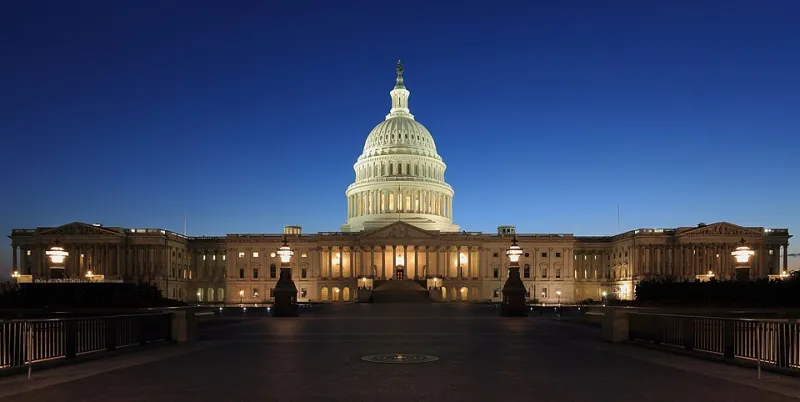
Photo: Martin Falbisoner, CC BY-SA 3.0, via Wikimedia Commons
Somewhere between the rhetoric of financial innovation and the instincts of financial regulation, a piece of legislation is taking shape that will touch far more Americans than its congressional sponsors probably realize. Stablecoins — dollar-pegged tokens that now settle trillions of dollars in annual transaction volume — are on the verge of getting a federal rulebook. Whether that rulebook serves users or incumbents is the fight worth watching.
Why Washington Suddenly Cares
For years, stablecoins lived in a policy blind spot. Then they became too big to ignore. Tether and Circle together hold hundreds of billions in assets, much of it in U.S. Treasury bills — meaning these private issuers are now meaningful participants in the market that funds the federal government. Meanwhile, Americans increasingly use stablecoins for things banks have made expensive: cross-border remittances, dollar savings in countries with unstable currencies, and increasingly, ordinary domestic payments.
That combination — systemic heft plus consumer adoption — is precisely what draws legislation. Proposals circulating in Congress would require issuers to hold high-quality liquid reserves, undergo regular audits, and obtain federal or state charters. On paper, these are the same disciplines that govern money market funds and traditional payment companies. Few serious observers argue against reserve requirements; the debate is over everything else.
The Case for the Guardrails
Let's be honest about what the current market gets wrong. The collapses of TerraUSD and the turbulence around certain issuers demonstrated that "stable" is a promise, not a guarantee, when nobody is checking the books. A framework mandating full, transparent, high-quality reserves would be a genuine upgrade — the difference between a currency and an IOU you have to take on faith.
Clear rules would also unlock mainstream participation. Major U.S. banks, payment processors, and retailers have largely sat out stablecoin issuance because the legal status was ambiguous. A workable charter regime could bring dollar-backed digital payments into everyday American commerce — instant settlement, negligible fees, no banking hours. For the millions of U.S. workers who send money abroad, competition from compliant stablecoins could compress remittance costs that currently average six percent or more.
Where the Framework Overreaches
Yet the same legislation carries provisions that deserve scrutiny. Some drafts would effectively prohibit yield-bearing stablecoins — tokens that pass through the interest earned on reserves to holders. The stated concern is protecting bank deposits from flight. Read that again: the argument is that consumers shouldn't be allowed to earn a market rate on their own money because it might inconvenience banks paying a fraction of a percent.
There are also legitimate questions about privacy and surveillance. A fully regulated, fully intermediated stablecoin system — where every issuer is a reporting entity and every wallet is potentially identifiable — starts to resemble the existing financial system with a blockchain bolted on. That may be the intent. But it would surrender much of what makes digital dollars compelling for people outside the traditional system: the unbanked, the underbanked, and anyone who has watched a payment get frozen for reasons they never understood.
What It Means for Your Wallet
For everyday American users, the practical near-term effects are modest: expect clearer disclosures, regulated issuers, and possibly the disappearance of some offshore tokens from U.S.-facing platforms. The long-term stakes are larger. If the framework preserves room for open, permissionless use — self-custody, peer-to-peer transfers, on-chain composability — stablecoins could become the default rails for digital dollars. If it instead funnels all activity through a handful of chartered intermediaries, the innovation will migrate offshore, and U.S. users will be left with a slower, more expensive imitation.
The right outcome isn't deregulation; it's regulation that distinguishes between protecting consumers from fraud and protecting incumbents from competition. Congress has one chance to draw that line correctly. Americans holding digital dollars — whether for savings, payments, or remittances — should pay close attention to where that line lands.