Thirty Days to On-Chain: A Cautious Beginner's Month-by-the-Numbers Plan for First DeFi Steps

Photo: person learning cryptocurrency laptop notebook beginner desk, via img.freepik.com
The hardest part of decentralized finance isn't the technology — it's the leap. Most guides assume you're ready to move your savings on-chain by page three. This one doesn't. What follows is a deliberately paced, four-week plan designed for the cautious American newcomer: someone with a modest budget, healthy skepticism, and a preference for learning with small stakes rather than large regrets.
Week One: Build the Foundation Before You Fund It
Days 1–7 are about education and setup, not money.
Start by choosing a self-hosted wallet — MetaMask, Rabby, or a hardware option like a Ledger if you prefer physical separation from the internet. Download only from official sources. Write your recovery phrase on paper, store it somewhere fireproof, and never type it into any website. No legitimate protocol, support agent, or DM will ever ask for it. This single rule prevents the majority of beginner losses.
Spend a few evenings reading: how a blockchain transaction works, what a smart contract is, and why "not your keys, not your coins" cuts both ways — self-custody means no customer service desk when you make a mistake.
Week one deliverable: a wallet installed, a recovery phrase secured offline, and a basic vocabulary.
Week Two: Fund Small and Practice Moving
With your wallet ready, acquire a small amount of cryptocurrency through a regulated U.S. exchange — think $50 to $100, an amount whose total loss would be an education expense, not a crisis.
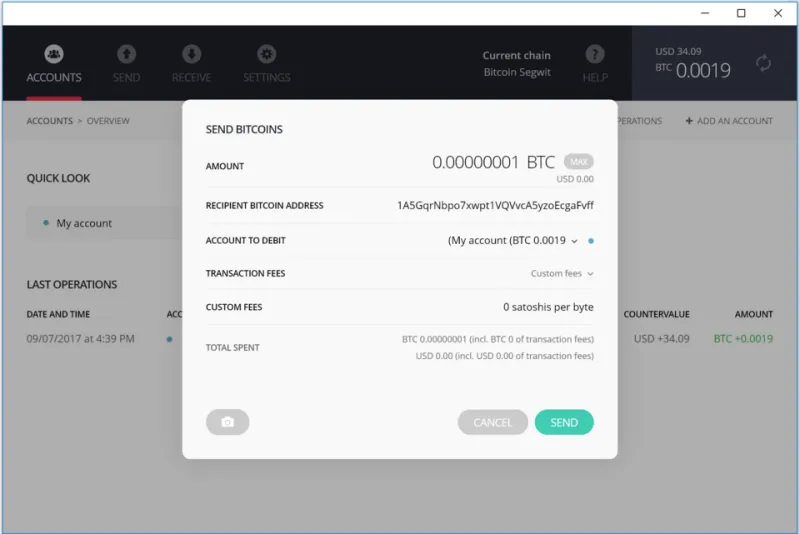
Now practice the mechanics. Send a small amount from the exchange to your wallet. Then send a fraction of it to a second wallet you control (create a fresh one for practice). Watch how block explorers like Etherscan display your transaction. Get comfortable with the fact that on-chain money moves in minutes, not business days — and that a wrong address is irreversible.
Week two deliverable: two successful transfers and a feel for how on-chain settlement actually works.
Week Three: Make Your First Protocol Interaction
Time to touch DeFi — with training wheels.
Choose a battle-tested, heavily audited protocol rather than whatever is trending. Blue-chip options for a first interaction include swapping a small amount on a major decentralized exchange (Uniswap on a low-fee Layer 2 like Base or Arbitrum keeps costs under a dollar) or depositing a modest sum into a large, established lending market such as Aave.
Before confirming anything, develop the habit of a three-point check: Is this the correct contract address? Have I read the transaction details in my wallet? Do I understand what permissions I'm granting? Token approvals deserve special attention — revoke anything you're not actively using.
Week three deliverable: one small swap or deposit, executed deliberately, with every permission understood.
Week Four: Assess, Document, and Decide
The final week is about turning a one-off transaction into an informed judgment.
Track your position: What are you earning, if anything? What are the risks? Understand the specific hazards of where your money sits — impermanent loss for liquidity providers, smart contract risk for lenders, depeg risk for anything promising a fixed value. Cross-reference your protocol's audits and its track record.
Then make an honest decision. If DeFi's trade-offs — self-custody responsibility, protocol risk, technical complexity — outweigh the benefits for your situation, that's a legitimate conclusion. If you proceed, scale gradually: a rule of thumb is never to allocate more on-chain than you'd be comfortable losing entirely, and to diversify across protocols rather than concentrating.
Week four deliverable: a written personal risk assessment and a clear go/no-go decision.
The Mindset That Matters
The most successful DeFi newcomers share one trait: they treat early positions as tuition. Every small transaction teaches you something a tutorial can't — how wallets behave, how fees fluctuate, how approvals work. By keeping stakes small and pace deliberate, you buy experience at a discount.
Thirty days is enough to go from curious to competent. It's not a race to yield; it's a controlled introduction to a financial system where you, not an institution, hold the keys. Take the month seriously, and the on-chain world stops being intimidating and starts being navigable.