Settlement That Never Sleeps: The Competitive Edge Crypto Markets Hand American Retail Investors
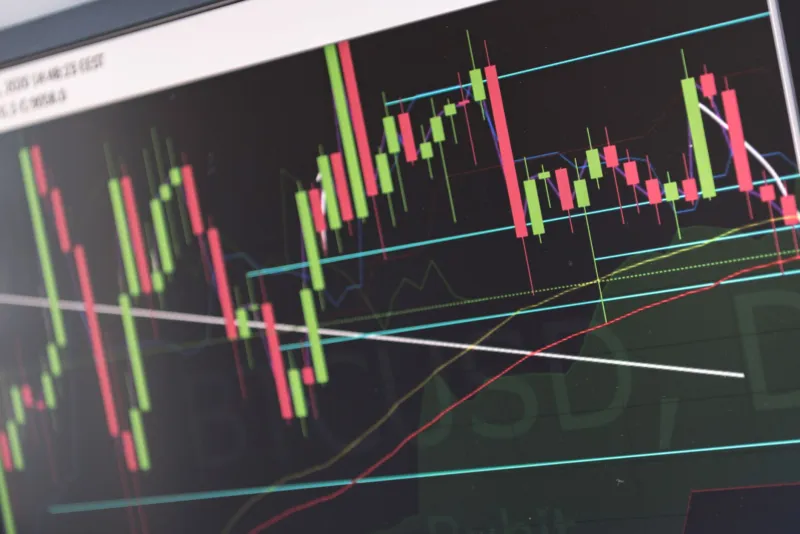
There is a moment that every active investor in traditional markets eventually encounters: a significant piece of news breaks on a Saturday afternoon, and there is nothing to be done about it until Monday morning. By the time the opening bell rings, the opportunity — or the damage — has already been priced in by futures markets and institutional players with weekend access. The retail investor, operating within the constraints of legacy market hours, simply absorbs whatever gap has opened.
This is not a minor inconvenience. It is a structural disadvantage baked into the architecture of American financial markets — one that blockchain-based assets have effectively abolished.
The Mechanics of Traditional Settlement Delay
To appreciate what crypto markets offer, it helps to understand precisely how antiquated the current system is. When an American investor purchases a stock on the New York Stock Exchange, the trade does not actually settle — meaning ownership does not legally transfer — for two business days after execution. This is known as T+2 settlement, a standard that has its roots in an era when physical stock certificates were mailed between counterparties.
The Securities and Exchange Commission has been pushing to compress this to T+1, and some progress has been made. But even T+1 is a full business day of exposure — a period during which either party in a transaction carries counterparty risk. Moreover, "business days" is the operative phrase. Weekends, federal holidays, and after-hours periods all fall outside the settlement window.
The practical consequence: US equity markets are accessible for approximately 252 trading days per year, during a window of roughly 6.5 hours each day. That amounts to about 1,638 hours of active market availability annually — out of 8,760 hours in a year. Traditional markets are open less than 19% of the time.
Blockchain Settlement: A Different Standard Entirely
Public blockchain networks operate on a fundamentally different model. A Bitcoin transaction, once confirmed, is settled within minutes. An Ethereum transaction reaches finality in seconds under current network conditions. There are no clearing houses, no custodial intermediaries processing batches overnight, and no calendar of market holidays.
This means that when geopolitical news breaks at 11:00 PM on a Friday, a crypto investor can respond immediately. When a protocol announces a major upgrade on a Sunday morning, market participants can act on that information in real time. The playing field, at least with respect to access timing, is dramatically more level than in traditional markets.
Data consistently supports the magnitude of this difference. Research from various blockchain analytics firms has shown that a substantial portion of significant price movements in crypto assets occur during hours when traditional US markets are closed. Investors restricted to legacy platforms have no mechanism to participate in or hedge against those movements until Monday morning.
Tax Strategy Implications That Most Retail Investors Overlook
The always-on nature of crypto markets introduces tax planning dimensions that are genuinely novel for American investors — and potentially advantageous when approached thoughtfully.
In traditional markets, year-end tax-loss harvesting is a well-established strategy: selling depreciated positions before December 31 to realize losses that offset gains, then waiting the 30-day wash-sale period before repurchasing. Crypto assets, as of current IRS guidance, are not subject to wash-sale rules. This means an investor can sell a depreciated Bitcoin position to capture the tax loss and repurchase immediately — a flexibility unavailable in equity markets.
Furthermore, the continuous nature of crypto trading means that positions can be managed, rebalanced, or exited at any hour of any day, including December 31. An equity investor trying to execute a year-end tax strategy is constrained by market hours; a crypto investor faces no such limitation.
It bears emphasizing that these strategies require careful record-keeping and ideally the guidance of a tax professional familiar with digital asset regulations. The IRS treats cryptocurrency as property, and every taxable event — regardless of what hour or day it occurs — must be documented and reported accurately.
The Institutional Asymmetry Problem
One of the most persistent critiques of traditional financial markets is that institutional players maintain structural advantages over retail participants. Access to after-hours trading, futures markets, and overnight institutional desks means that large funds can respond to information and manage risk at times when individual investors simply cannot.
Crypto markets do not eliminate institutional advantages — sophisticated market makers and algorithmic trading firms operate in these markets as well. But they do remove one of the most basic sources of asymmetry: access to the market itself. A retail investor in Omaha with a self-custodial wallet and a decentralized exchange connection has the same market access at 2:00 AM on a holiday weekend as a trading desk in Manhattan. That is not a trivial equalization.
What This Means for Long-Term Wealth Building
For Americans focused on building wealth over time rather than speculating on short-term price movements, the significance of continuous settlement extends beyond moment-to-moment trading. Dollar-cost averaging strategies — investing fixed amounts at regular intervals — can be executed with greater precision when markets are always available. Automated investment protocols built on blockchain infrastructure can execute these strategies without human intervention, at whatever frequency an investor specifies.
Decentralized finance protocols add another dimension: the ability to put idle assets to work generating yield at any hour, without waiting for a bank to open or a brokerage to process a transaction. Liquidity provision, lending, and staking mechanisms operate continuously, compounding returns in ways that traditional savings instruments simply cannot match in terms of accessibility or flexibility.
A Structural Advantage Worth Taking Seriously
It would be intellectually dishonest to suggest that crypto markets are without risk. Volatility in digital assets can be severe, regulatory landscapes are still evolving, and the technology carries its own category of operational risks. These are real considerations that every investor must weigh.
But the structural argument stands on its own merits: a financial system that operates 24 hours a day, 365 days a year, with settlement measured in seconds rather than days, represents a genuine improvement over legacy infrastructure — particularly for retail participants who have historically been last in line when traditional markets impose their constraints. For American investors who understand and accept the risks, that advantage is not abstract. It is measurable, practical, and available right now.