Reserves on Paper, Queues in Practice: A 2026 Stress Test for Instant Redemption Promises
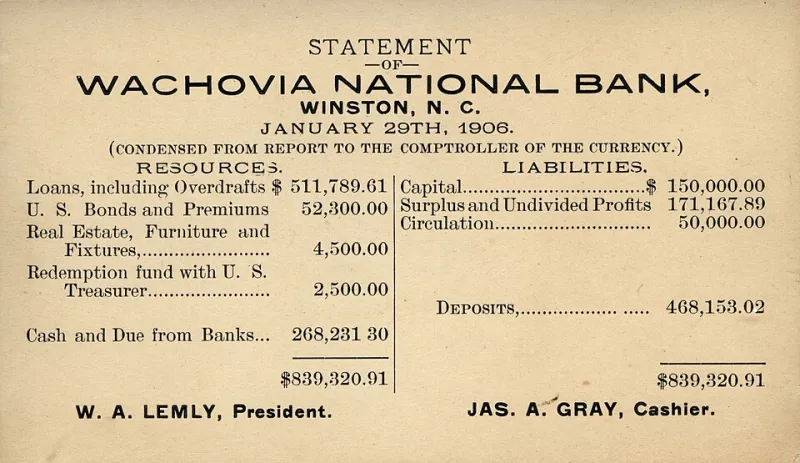
Photo: Wachovia National Bank, Winston, NC, Public domain, via Wikimedia Commons
Instant redemption has become a familiar phrase in crypto marketing, but the phrase hides an operational question. A platform may publish a reserve report that is accurate at a point in time and still lack the cash, stablecoins, or liquid collateral needed to honor every withdrawal request during a stress event. For US holders, the distinction matters because proof of reserves is often treated as a liquidity guarantee. It is not. Reserves describe what exists on a balance sheet on a given date. Liquidity describes what can be converted into the promised asset, in the promised timeframe, without moving the market, breaching legal constraints, or depending on a single counterparty that may be closed for the holiday.
What a reserve report can and cannot show
A credible reserve report can show asset composition, custody arrangements, and the size of reported liabilities. It can also reveal whether the attestation covers the legal entity that actually owes customers, or merely an affiliate with a similar name. What it usually cannot show is whether those assets are unencumbered, immediately transferable, or sufficient to meet a redemption queue that forms faster than the report can be updated.
The gap is not a technicality. Tokenized Treasury products may settle during business hours. Bank deposits may move through systems with cut-off times. Stablecoin reserves may be held at custodians with their own withdrawal rules. A platform can be solvent in accounting terms and illiquid in operational terms. That is why the useful question is not simply whether reserves exist, but whether the redemption promise survives a bad weekend.
Three questions behind every instant redemption claim
First, what exactly is being redeemed? A claim to a dollar, a claim to a token, and a claim to a share of a fund are different products with different legal rights. Second, who controls the asset and can move it at 3 a.m. on a Saturday? Third, what happens if everyone asks at once? A platform that answers the first question well but avoids the second and third has given customers a balance sheet, not a liquidity plan.
A practical stress-test checklist
Disclosure quality is the starting point. Look for an audit or attestation that names the entity, the date, the scope, and the liabilities covered. Check whether affiliates, customer assets, and encumbered holdings are included. A report that lists assets without matching liabilities is incomplete.
Liquidity buffers deserve separate scrutiny. Ask what portion of reserves is held in cash, short-term government securities, stablecoins, or less liquid tokens. Then ask how each category converts under stress. A Treasury bill may be safe, but it is not the same as an overnight deposit. A stablecoin may be liquid in normal conditions, but its own redemption terms matter.
Redemption queue mechanics are often buried in terms of service. Find out whether withdrawals are first-come-first-served, pro rata, gated, or subject to processing windows. Check minimums, fees, holiday schedules, and manual review triggers. If the platform promises instant withdrawal, determine whether that promise is funded by a hot wallet, a credit line, or a market maker. Each source has a different failure mode.
Counterparty concentration is the next test. A platform may rely on one bank, one custodian, one market maker, or one blockchain bridge. Concentration is not automatically bad, but it should be disclosed and understood. Ask what happens if that counterparty pauses withdrawals, fails, or changes terms.
Legal structure and operational history complete the picture. Identify the entity that holds customer assets and the entity that owes the redemption. Review incident history, status-page communications, and past queue behavior. A platform that communicates clearly during minor outages is more credible than one that goes silent when stress appears.
The holiday weekend scenario
A useful exercise is to imagine a request submitted at 2 a.m. on the Saturday after Thanksgiving. Does the platform promise an automated on-chain transfer, or does the request sit until staff return on Monday? If the answer is manual review, the effective redemption time is not instant. If the answer is a hot wallet, ask how much inventory is held there and how it is replenished. If the answer is a market maker, ask who bears the price risk if the market moves before the trade settles.
For stablecoin holders, the issue is similar. Redemption at par from an issuer is not the same as selling into a secondary market at a discount. A platform may allow instant swaps while its own redemption window is slower. That is a liquidity mismatch, and customers should know where it sits.
Reading disclosures like an operator
US holders do not need to become auditors, but they should read disclosures with an operator's eye. Look for precise language about timing, conditions, and eligible assets. Be wary of reports that emphasize total reserves without showing liability maturity or asset location. Treat reserve figures as a starting point, not a conclusion.
Practical safeguards remain simple. Test small withdrawals before relying on a platform for larger sums. Keep records of terms and disclosures. Diversify custody across providers. Monitor status pages during market stress. None of these steps eliminates risk, but they make the difference between trusting a label and testing a promise.