Confirmed Is Not Final: Reading Settlement Signals on High-Speed Blockchains

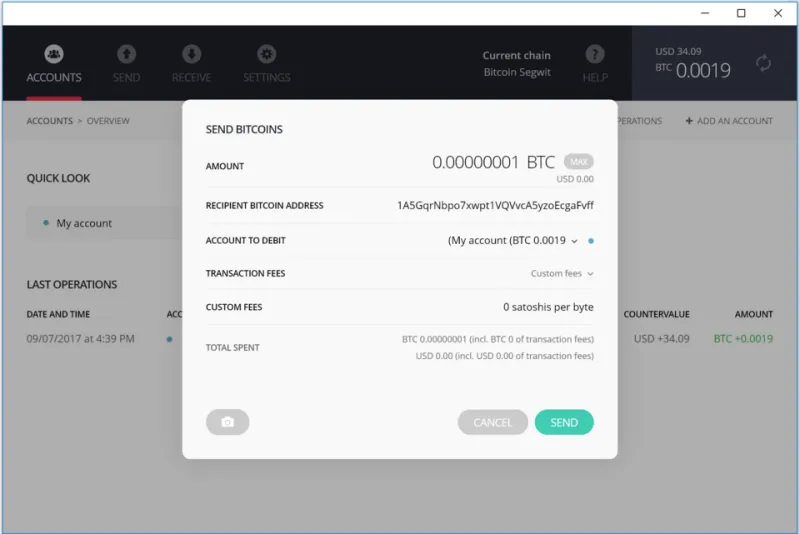
Photo: blockchain explorer screen showing transaction confirmations and finality status, via a-z-animals.com
Fast blockchains have changed the vocabulary of settlement. Wallets and explorers now report confirmations in seconds, and marketing pages often promise near-instant transactions. For a US user moving assets between a self-hosted wallet and an exchange, however, the word confirmed can mean several different things. Understanding the difference between inclusion, confirmation, and finality is essential to judging whether speed is real or simply a user-interface impression.
Two Kinds of Certainty
Blockchain systems generally offer either probabilistic or deterministic finality. In a probabilistic model, a transaction becomes more secure as more blocks are built on top of it. Each additional block raises the cost of rewriting history, but no single moment makes reversal mathematically impossible. In a deterministic model, the protocol defines a point at which a transaction is final under its rules, often through validator voting or checkpoints.
Fast chains may use either approach, and some combine them. A network can produce blocks quickly while still requiring additional conditions before finality. That distinction matters because a wallet may display confirmed when a transaction is included in a block, even if the protocol has not reached its finality threshold.
What a Reorganization Actually Does
A reorganization, or reorg, occurs when a chain replaces one set of blocks with another. A transaction that appeared in the discarded segment may be moved to a later block or disappear entirely. Short reorgs can happen on many networks as part of normal consensus operation; deeper reorgs are more serious.
For users, the risk is practical. A merchant may release goods after one confirmation, or a decentralized application may treat a transaction as complete before finality. If a reorg occurs, the apparent payment can vanish. This is why settlement systems often wait for a defined number of confirmations rather than trusting the first block.
Why Your Exchange Still Makes You Wait
US exchanges impose their own deposit policies for reasons that go beyond chain mechanics. They manage reorg risk, fraud, money-laundering controls, and operational reconciliation. A deposit may be visible on-chain long before it is credited as available to trade. The exchange’s help center usually lists required confirmations or a finality threshold for each asset and network.
Those delays are not necessarily evidence that the blockchain is slow. They reflect the exchange’s role as a custodial intermediary. The platform is choosing when to accept settlement risk. Users who compare block times without comparing exchange crediting policies are measuring only half the journey.
Soft Confirmations and Marketing Language
Some high-speed networks rely on sequencers or validator sets that provide fast soft confirmations. A soft confirmation signals that a transaction is likely to be included, but it may not carry the same guarantees as protocol-level finality. Marketing materials sometimes blur this line by using instant for the user experience and final for the underlying settlement.
A wallet’s confirmed label should be read together with the network’s finality rules. If the wallet does not explain the distinction, check the chain documentation and the exchange’s deposit policy. Look for time-to-finality, not only block time.
How to Judge Whether Speed Is Real
Ask four questions. What is the network’s finality mechanism? How many confirmations or what threshold does the recipient require? Has the network experienced meaningful reorgs? And does the service provider absorb settlement risk or pass it to the user?
For a large transfer, test with a small amount first. Confirm the asset and network, then observe how the receiving platform credits the deposit. Use a block explorer to see inclusion and finality status where available. Do not rely on a single green checkmark.
Speed With Clarity
Instant transactions are valuable, but finality is a property of the protocol and of the intermediary’s policy. A responsible user treats confirmation as a signal, not a guarantee. In 2026, the most useful question is not simply how fast a chain produces blocks. It is how quickly, and under what conditions, the recipient will treat the transfer as truly settled.